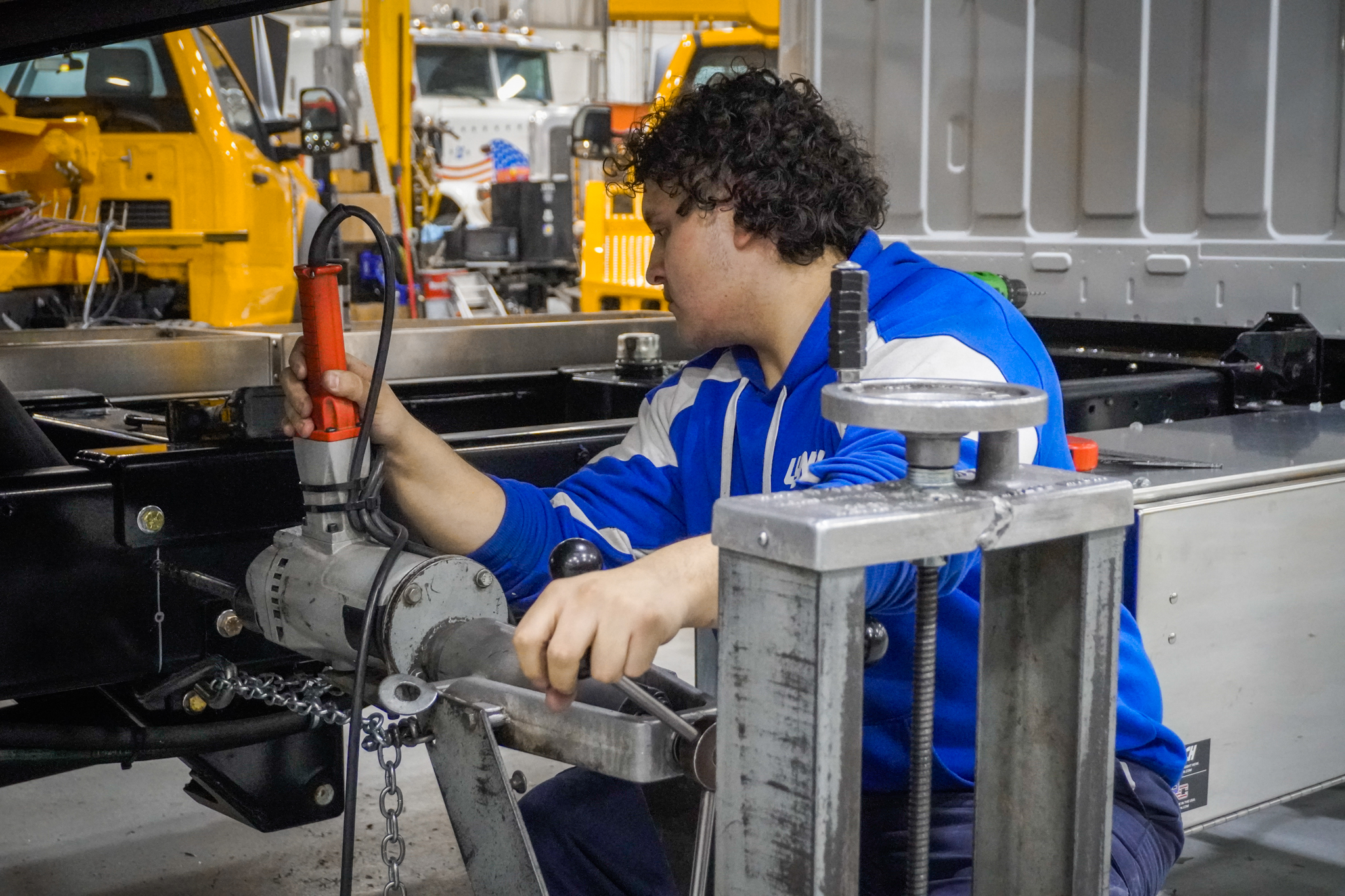
Where to Get Annual DOT Inspection and Compliance Repairs for Your Commercial Fleet

Why the Annual DOT Inspection Decides Whether Your Trucks Keep Earning
A truck that misses its inspection window does not just risk a citation. It risks sitting still, and a parked truck earns nothing while the payments, insurance, and driver wages keep coming. That is the real weight behind the federal requirement that every commercial motor vehicle pass an inspection at least once every twelve months. For an owner-operator with one rig or a fleet manager juggling forty, the question of where to get annual DOT inspection service is less about checking a box and more about protecting the revenue each truck brings in.
The inspection itself is straightforward on paper. A qualified inspector goes over the brakes, steering, suspension, lights, tires, and a long list of other safety items, then signs off if everything meets standard. The complication shows up when something does not pass. Now you are not scheduling a quick check. You are scheduling a repair, finding the right parts, and hoping the shop can turn it around before your truck is due on a load.
Where you take the truck shapes how that whole sequence plays out. Some operators run inspections in-house, some use a roadside lane, and others bring the work to a dealership that can inspect and repair under the same roof. Each path carries tradeoffs worth understanding before your next compliance deadline lands. What follows breaks down what the inspection covers, who is allowed to perform it, and how to keep a failed item from turning into days of lost work.
What the Federal Annual Inspection Requires
The rule lives in the Federal Motor Carrier Safety Regulations, specifically 49 CFR 396.17, which says every commercial vehicle you operate has to be inspected at least once every twelve months. There is no grace period that quietly extends the deadline, and the responsibility sits with the motor carrier, not the driver or the shop. If the inspection lapses, the vehicle is not legal to run, and a roadside stop can pull it out of service on the spot. You are also expected to keep the inspection report on file and, in most cases, display proof that the truck passed, so the paperwork is part of the obligation rather than an afterthought.
What trips up a lot of operators is assuming the annual inspection is the same as a quick safety glance or an oil change. It is a defined procedure with set standards, and the inspector has to measure specific systems against federal criteria rather than eyeballing the truck and waving it through.
The Components an Inspector Has to Sign Off On
The federal standards spell out exactly what gets checked, and the list runs longer than most drivers expect. Brake systems get the closest look, including the linings, drums, hoses, and the air system on units equipped with one. Steering components, the suspension, and the frame all have to be sound, with no cracks, loose fasteners, or worn parts that could fail under load.
From there, the inspector moves through the lighting and reflective gear, the tires and wheels, the exhaust and fuel systems, the windshield and wipers, and the coupling devices on anything that pulls a trailer. Tread depth, tire condition, and proper inflation all factor in, since a marginal tire is one of the most common reasons a truck gets flagged. Fuel and exhaust leaks, frayed wiring, and cracked glass each carry their own out-of-service thresholds.
None of these items are arbitrary. Every one ties back to a failure mode that has put trucks in ditches or stranded them on the shoulder. A shop that inspects commercial vehicles every day knows where these problems hide, which matters when the difference between a pass and a fail comes down to a worn bushing or a hairline crack you would never spot from the cab.
Who Is Qualified to Perform the Inspection
Not just anyone can put their name on an annual inspection. Federal rules require the inspector to be qualified, which means documented training or experience that lets them identify defective components and understand the standards they are measuring against. Brake work carries an extra layer, since the person inspecting or repairing the brakes has to meet specific qualification requirements of their own.
This is where the choice of shop starts to matter more than people assume. A general garage may technically be able to perform the inspection, but the depth of knowledge varies widely. Heavy trucks, tow units, and vocational vehicles run systems a passenger-car mechanic rarely touches, from air brakes to hydraulic wheel lifts. An inspector who works on these trucks daily is far less likely to miss something or, just as costly, to flag something that did not need attention.
When the inspector and the technician work in the same building, you also avoid the back-and-forth of getting a fail report from one place and hauling the truck somewhere else to fix it. The carrier is also responsible for keeping records that show the inspector met federal requirements, which is one more reason many operators would rather hand the whole job to a shop that documents it for them. That continuity saves real time, and time is the whole game in this business.
Your Real Options for Getting the Inspection Done
Operators generally have a few realistic paths. You can perform inspections in-house if you employ a qualified inspector and keep the records straight, which also means maintaining proof of that inspector's training and the tooling to do the job right. You can use a state-run lane or a roadside inspection that satisfies the periodic requirement. Or you can bring the truck to a commercial service department built around exactly this kind of work.
Each option has a place. The in-house route works for large fleets with the staff and tooling to support it. The roadside option is convenient but offers no path to repair if something fails. For most fleets and owner-operators, figuring out where to get annual DOT inspection work handled without creating a second logistics problem points toward a dedicated commercial truck service center that can both certify the truck and fix whatever the inspection turns up.
Why a Commercial Truck Dealership Service Department Wins
A dealership service department brings a few advantages a standalone shop usually cannot match. The first is factory authorization. When a shop is certified by the manufacturers it works on, its technicians get trained on the actual systems in your trucks and have direct access to the diagnostic tools and procedures those brands require. A fail diagnosis is more likely to be right the first time.
The second advantage is parts. A dealership stocks genuine, manufacturer-backed components for the brands it represents, so a failed part can often be replaced the same day rather than waiting on an order from a distant warehouse. Using factory parts also keeps any remaining manufacturer warranty intact, which matters on newer trucks still under coverage. For a truck sitting idle, that gap between diagnosis and repair is where money leaks out.
The third is range. The same department that inspects your truck can handle the engine, the transmission, the brakes, the hydraulics, and the body, which keeps you from bouncing between specialists. Lynch Truck Center built its service operation around this model, working on both commercial and tow trucks of nearly every make from a single facility staffed by technicians who do this all day.
When a Routine Inspection Turns Into Compliance Repairs
Plenty of inspections end with a clean sticker and a truck that is ready to roll. Many do not. A vehicle that has been working hard for a year almost always shows wear somewhere, and the inspection is designed to catch it before it becomes a roadside breakdown or a violation. The older the truck and the harder the miles, the more likely the check becomes the moment deferred items finally have to be dealt with.
The smart way to treat an annual inspection is as the front end of a maintenance event, not a standalone errand. If you walk in expecting that the check might surface a repair, you can plan the downtime instead of scrambling for it. This is part of why the question of where to get annual DOT inspection service and the question of who handles your repairs really should have the same answer. Splitting them adds delay at the worst possible moment.
Brake, Steering, and Suspension Issues That Surface Most Often
Brakes top the list of what fails an inspection, and for good reason, since they take the most abuse and carry the tightest standards. Worn linings, glazed shoes, leaking chambers, and out-of-adjustment slack adjusters all show up regularly. On air-brake trucks, the whole system gets scrutinized, and a single weak component can sideline the unit until it is corrected. Catching a brake problem in the bay is far cheaper than catching it at a roadside inspection, where an out-of-service order can strand the truck and dent your safety record.
Steering and suspension are close behind. Loose tie rods, worn kingpins, sagging springs, and cracked hangers develop gradually under heavy loads, and a driver often cannot feel them until they are well advanced. These are not parts you want to guess on, because a steering or suspension failure at highway speed is among the most dangerous things that can happen to a loaded truck.
A shop that keeps factory-warranted replacement parts on hand can address these faults quickly instead of leaving your truck on a lift while components ship in. That mix of correct diagnosis and ready inventory turns a failed inspection into a same-week return to service rather than an open-ended wait.
Lighting, Tires, and the Small Stuff That Still Sidelines a Truck
Not every failure is dramatic. A surprising share of trucks get flagged for items that sound minor until they cost you a day. Burned-out marker lights, a cracked lens, a dead turn signal, or faded reflective tape can each draw a violation. Lighting problems are cheap to fix yet easy to overlook during a busy week.
Tires are another frequent culprit. Tread below the legal minimum, uneven wear, exposed cord, sidewall damage, or a slow leak that leaves a tire underinflated will all stop a truck from passing. Because tires wear unevenly across an axle, a unit that looked fine last month can fail today.
Wipers, mirrors, the windshield, and exhaust leaks round out the list of smaller items that still carry real weight in an inspection. Folding a quick lights-and-tires look into your drivers' pre-trip routine cuts down on surprises, though the annual inspection is still where borderline items get caught for good. The advantage of a full-service shop is that these fixes get knocked out in the same visit, so you are not pulled off the road twice for problems that could have been handled together.
Keeping Downtime Short When a Truck Fails Inspection
The cost of a failed inspection is rarely the repair bill. It is the lost load, the idle driver, and the customer who needed delivery yesterday. Every hour a truck spends waiting on a diagnosis or a part is an hour it is not earning, which is why turnaround time should weigh heavily in deciding where you take your fleet.
A few things shorten that window. Fast initial diagnostics get you an answer quickly instead of leaving the truck in a queue. On-site parts inventory means common failures get fixed the same day. And enough bays and technicians to absorb the work keep your truck from sitting behind a dozen others. Lynch runs a first- and second-shift operation out of a twenty-nine-bay facility to compress that downtime, and you can book a service appointment ahead of your inspection deadline so the truck moves straight from check to repair if needed. Pickup and drop-off service plus extended shop hours help too, letting you hand off the truck without burning a driver's day in a waiting room.
Planning the visit before the deadline, rather than after a roadside stop forces your hand, is the single biggest thing an operator can do to control the cost of compliance.
Why Smart Fleets Handle Inspections and Repairs Under One Roof
For a single truck, bouncing between an inspection lane and a repair shop is an annoyance. For a fleet, it becomes a scheduling headache that multiplies with every unit. Coordinating inspection dates, tracking which trucks passed and which need work, and routing failures to a second vendor eats hours a manager does not have to spare.
Consolidating the work solves most of that. When one provider inspects the trucks, performs the repairs, and keeps the records, you get a single point of contact and a clear picture of your fleet's health. Many operators fold this into a broader maintenance rhythm, scheduling inspections alongside preventative work so trucks come off the road on a predictable cadence rather than at random. A structured fleet management program can take this further, pairing scheduled service with tools that track each vehicle across its working life. The payoff is fewer surprises, less paperwork, and trucks that spend more time loaded and moving. A single service history also makes audits simpler and supports resale value when it is time to cycle a truck out of the fleet.
What Lynch Truck Center Brings to Your Inspection and Repair Schedule
Lynch Truck Center built its service department for the exact situation this whole discussion describes, where an inspection and the repairs behind it need to happen quickly and correctly. The shop runs twenty-nine bays across two shifts in Waterford, Wisconsin, staffed by ASE-certified technicians whose combined experience runs into the hundreds of years. These are people who work on commercial and tow trucks every day, not generalists splitting time between cars and heavy equipment. A rapid initial check after drop-off gives you findings fast, and a 27,000-square-foot floor with heavy overhead cranes means even the largest wreckers and rotators fit the work.
The department is factory-authorized for Hino, Isuzu, Chevrolet, GMC, Workhorse, Allison Transmission, and Cummins, and its technicians service major chassis brands including Peterbilt, Kenworth, Freightliner, International, and RAM, along with Miller Industries towing equipment. That breadth means most of what an inspection can flag, from a brake fault to a hydraulic leak to a steering repair, gets handled in the same building with manufacturer-backed parts.
All of that is why so many operators stop shopping around for where to get annual DOT inspection appointments and simply book with a team they already trust. The inspection, the diagnosis, and the fix happen in one place, on a timeline built to keep trucks earning.
Keeping Your Fleet Road-Ready and Compliant Year-Round
Staying compliant should not mean losing days to scattered shops and slow repairs. The operators who handle it best treat the annual inspection as one piece of a steady maintenance plan and lean on a service partner that can inspect, diagnose, and repair without missing a beat. If you want that kind of single-source support for your trucks, the team at Lynch Truck Center is ready to keep your fleet inspected, repaired, and back on the road. Reach out to the service department to get your next inspection on the calendar.