How to Choose a Work Truck That Matches Your Payload and Upfit Needs

Payload capacity and body type are two different specifications, and both have to be settled before anyone orders an upfit. A work truck earns its keep when the body matches the job and the chassis carries that loaded body legally, so getting one of those right while guessing at the other is the fastest way for a purchase to go sideways. Crews usually figure out the body style quickly, since the work itself tells them what they need. The payload arithmetic gets skipped far more often, and the bill for skipping it arrives the first week the truck is loaded.
What You Need Before You Start Comparing Trucks
You need a documented payload number rather than an estimate. Your total should include hand tools, parts stock, the materials you haul on a typical day, crew weight, fuel, and every piece of equipment that gets bolted to the body, including a crane, compressor, or generator. Payload is GVWR minus curb weight, and curb weight counts the body once it's mounted, which is exactly where the math falls apart for buyers comparing bare chassis figures on a brochure.
The second prerequisite is a body-type requirement written down and tied to the jobs your crew actually runs, including stop count, loading method, and what has to stay dry or locked. Job function decides body type. Brand loyalty and whatever the last truck happened to have are poor guides here. Buyers who skip both steps tend to learn after delivery that a three-quarter-ton pickup cannot legally carry a loaded service body plus a three-man crew, and no suspension upgrade raises a GVWR limit.
Matching Truck Class to the Load
Truck class sets the legal payload ceiling, the frame strength, and the body mounting options available to you. Light-duty pickups in Class 1 through 3, the Silverado 1500 through 3500 range and its equivalents, work for crews carrying hand tools, a compressor, and moderate material. Medium-duty platforms in Class 4 through 6, including the Silverado 4500 and 5500 along with cabovers from Hino and Isuzu, are where contractors and delivery operators land once loads outgrow a pickup frame. Class 7 and 8 vocational trucks cover specialized industrial and municipal work.
The gap between a 3500 HD pickup and a 5500 is wider than the rating on the door jamb suggests. A 5500 rides on a commercial frame built for body mounting, with clean rail behind the cab and the provisions a body builder expects to find. The 3500 is a consumer-derived chassis pressed into commercial service, and plenty of bodies mount on one, but the frame wasn't designed around that job first. Choosing class by brand familiarity rather than by load requirements is how a light-duty chassis ends up chronically overloaded, or how a buyer pays for capacity nobody on the crew will ever use.
Single Rear Wheel vs. Dual Rear Wheel for Your Application
Dual rear wheels add rear axle capacity, and heavier service bodies, flatbeds hauling dense material, and mechanics bodies loaded with equipment generally require them. Single rear wheel keeps the turning radius tighter and cuts tire replacement cost by two casings every time the rears come off, which adds up on urban routes and lighter service work.
The tradeoff isn't only about capacity. A dually is physically wider at the rear. Alley access, residential driveways, tight parking structures, and how close the truck can get to the work all reflect that extra width. Before you commit either way, you should get the body manufacturer's minimum rear axle rating for the body you intend to mount and check your chosen configuration against it.
Choosing a Body Style by Job Function
Body type is the biggest functional decision left once class and wheel configuration are set. Each body serves a particular workflow, and a mismatch costs the crew time every day regardless of how good the chassis under it is.
Service Body and Mechanics Body
A service body puts locking compartments down both sides of the frame with an open bed between them, which suits electrical, plumbing, and HVAC crews running several stops a day with hand tools, small power tools, and parts. The mechanics body is the heavier relative, with deeper compartments, a reinforced floor, and provisions for a crane or jib so equipment can be lifted on site.
The weight difference matters more than the price difference. A mechanics body eats into payload before a single wrench goes in a drawer, and a chassis chosen for a standard service body often can't carry one. Crane mounting, outrigger placement, and compartment layout all get decided during in-house commercial truck upfitting and fabrication, so you want the full equipment list in that conversation rather than after the body is built.
Flatbed, Stake Bed, and Dump Body
A flatbed gives you an open load floor for lumber, pipe, steel, and equipment, and it's the default for contractors loading with a forklift or crane. Stake beds add removable side rails when loose bulk material needs containment without a full enclosure. Dump bodies add a hydraulic hoist for unloading, and the landscape dump is the lighter version, sized for mulch, soil, and debris on a smaller chassis.
Hoist hydraulics are where buyers routinely underspec the order. A hoist needs either a PTO off the transmission or an electric pump, and the PTO has to be ordered at the chassis level before the body is built. You should plan on commercial truck hydraulic repair and service appearing in the maintenance schedule as well, since cylinders, pumps, and hoses wear on a timeline of their own.
Box Trucks, Cargo Vans, and Enclosed Bodies
Box trucks and upfitted cargo vans both give you enclosed cargo space, and they suit different route profiles. A box van on an E-450 or comparable cutaway chassis carries far more cubic volume and gives you a walk-in rear door, which pays off on delivery routes with high daily stop counts. Vans like the ProMaster or Express, shelved out for a trade, are more maneuverable in city traffic and sit lower for hand-loading dozens of times a shift. Refrigerated bodies belong to the same enclosed category, and the reefer unit gets sized to the cargo temperature you have to hold rather than to the cubic feet of the box.
Specialty Bodies for Specific Trades
Hooklift bodies use a hydraulic arm to pick up and set down interchangeable containers, so one chassis can handle debris removal in the morning and material delivery in the afternoon without a second truck sitting in the yard. Welder bodies arrange a generator, leads, and gas storage in a purpose-built layout. Fuel lube trucks carry tanks, reels, and pumps for fueling and fluid service at the site. Chipper bodies are built to take discharge from a chipper chute. Most of these are order-built rather than stock units, so lead time planning belongs in the decision from the start.
Cab Configuration and Its Effect on Body Length
Cab choice changes the wheelbase and the usable frame length behind the cab. The frame length left behind the cab caps how long a body you can mount. A crew cab on a given medium-duty wheelbase leaves less room for the body than a regular cab on the same wheelbase, so a four-door truck and a 12-foot service body may not coexist on the chassis you were quoted. Do you need those extra seats every day, or on two jobs a month? Crews that genuinely need them should verify the resulting body length against the equipment layout before signing anything. Prioritizing cab room and discovering later that the body shrank is one of the most common spec errors on service body orders.
What an Upfit Actually Involves
An upfit is the work of installing a body, equipment, and accessories on a chassis after the chassis is acquired, and it's a separate purchase with its own specification, cost, and lead time. A chassis is not a work truck until that step is finished. Most commercial upfits cover body mounting, electrical integration for work lights, beacons, inverters and power outlets, PTO hookups, shelving and drawer systems, a liftgate, toolboxes, ladder racks, and lettering.
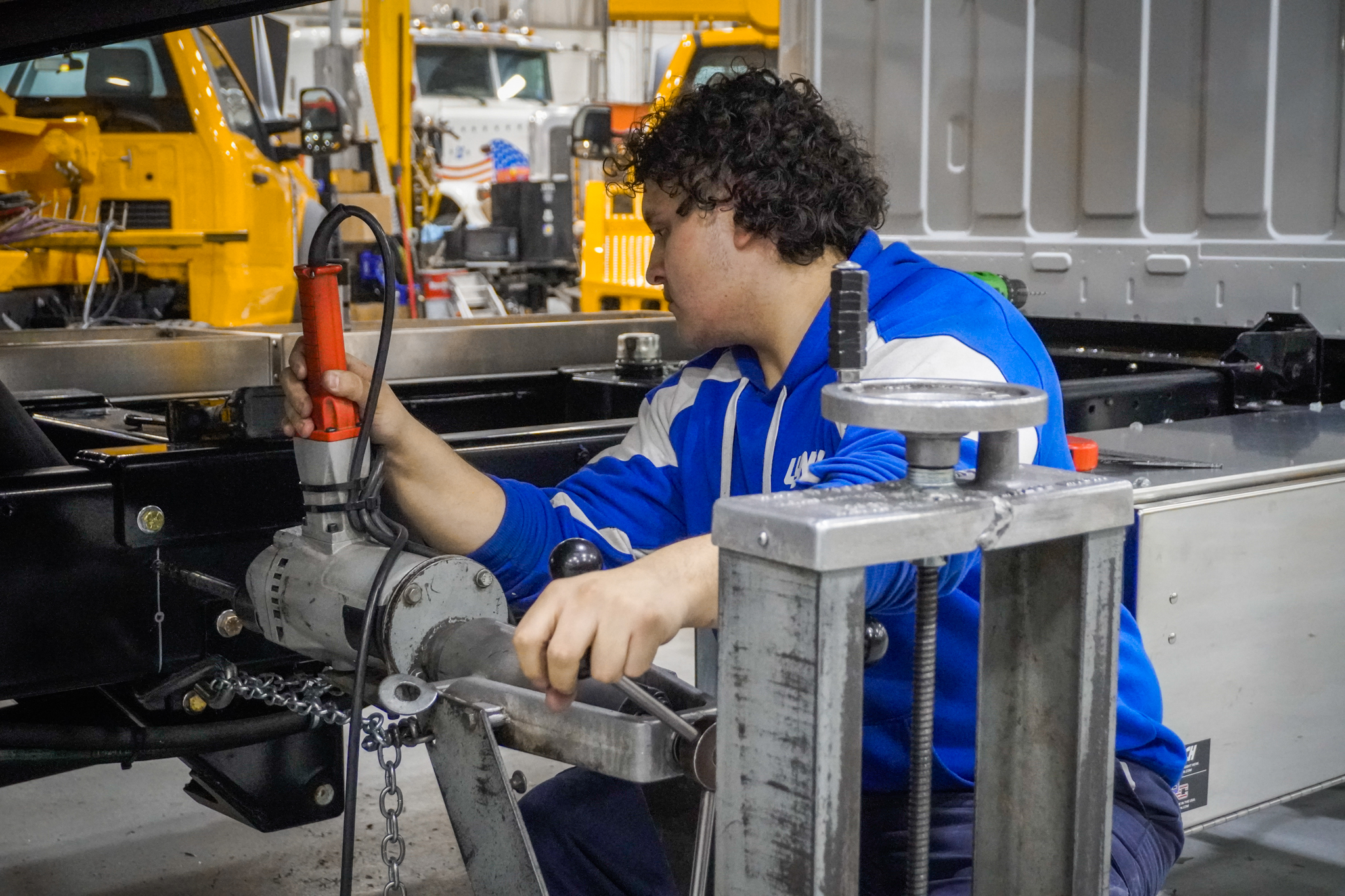
The chassis has to be specced to support the upfit before the body is ordered, since changes after chassis delivery can mean frame modification, rewiring, or a whole new mounting plan. Lynch Truck Center offers commercial truck upfitting and equipment installation in house through Lynch Upfit, and keeping body mounting, equipment work, and chassis prep under one roof shortens the stretch between chassis delivery and a truck the crew can load.
4x4 vs. 4x2 and When the Drivetrain Decision Matters
Four-wheel drive costs more up front, burns more fuel, adds driveline components to maintain, and adds curb weight that comes straight out of your payload allowance. Crews working paved routes and stabilized sites do fine on 4x2 and keep the savings. On raw dirt, gravel pads, snow, or graded lots that turn to mud, 4x4 is a productivity and safety requirement, and no tire choice substitutes for it. You should run the payload numbers again after you pick the drivetrain, since the 4x4 version of the same truck carries less.
When the Obvious Truck Choice Does Not Work
Buyers who order a light-duty pickup because the shop has always run that badge often find the payload rating short once a loaded service body, two crew members, and a full parts drawer are aboard. Stepping up to a medium-duty chassis is the fix. Helper springs and airbags change ride quality without raising GVWR by a single pound.
Ordering the body before confirming chassis lead time creates a second problem. A body that lands weeks ahead of the chassis becomes a storage problem and a scheduling problem at the same time, and the shop pays for both. Coordinating chassis and body through one source, or at minimum confirming both lead times before either order goes in, keeps that from happening. Operators buying several trucks at once often lean on fleet analysis and truck selection support to keep the sequencing straight across a replacement cycle.
The third common error is the crew cab that squeezes the body. Four seats specced without checking body length leaves you with a service body too short for the equipment layout your crew depends on. Accepting a shorter body or moving to a regular cab with a jump seat are the two honest options, and the right answer depends on which one the crew can live with every day.
New vs. Used Work Trucks and What Changes in the Decision
A new chassis lets you build the upfit exactly the way the work demands, with factory warranty behind the drivetrain. Used trucks often arrive with a body already mounted, which cuts cost and time when the body type and condition fit your needs, though the upfit has to be evaluated separately from the chassis. Compartment rust, worn hoist cylinders, and spliced wiring don't show up on a mileage report.
Financing terms, warranty coverage, and upfit compatibility all shift between new and used, so it makes sense to weigh them together rather than one at a time. A used work truck with the right body already installed usually beats new for a buyer who needs a specific configuration soon, while a new chassis with a custom upfit is the more dependable route when your requirements fall outside standard body catalogs. You should sort out commercial truck financing and leasing support early, since the structure of an approval can shape which of those two paths is realistic.
Confirming the Spec Before You Order
A finished work truck spec answers a short list of questions in writing before it reaches a dealer or an upfitter.
-
GVWR and payload confirmed with the loaded body, equipment, crew, and daily materials counted
-
Body type matched to job function, loading method, and stop count
-
Cab configuration checked against the body length the work requires
-
Drivetrain chosen for the ground your crews actually work on
-
SRW or DRW verified against the body manufacturer's minimum axle rating
-
Upfit scope documented, including electrical, hydraulics, racks, and liftgate, before the chassis order is placed
Buyers who arrive with those six answers get a truck that fits the work on day one, and they spend the conversation on configuration and availability instead of on rework. Lynch Truck Center is a family-run commercial and tow truck dealership that states over 35 years of experience and locations in Waterford, Chicago, and Denver. You can bring your payload figures and body requirements and contact us to match them against what's on the lot.