What Towing Companies Should Evaluate Before Buying a Medium Duty Wrecker for Sale

Where a Medium Duty Wrecker Fits in Your Fleet
A towing company lives and dies by how well its trucks match the work coming over the phone. Buy too light, and you turn away calls or burn out a unit that was never built for the load. Buy too heavy, and you tie up capital in a rig that sits in the yard between the rare jobs that justify it. The medium duty class exists for that middle ground, the daily grind of box trucks, loaded pickups, sprinter vans, small RVs, and the occasional wreck a light truck cannot handle safely.
Shopping for a medium duty wrecker for sale means weighing trade-offs that do not always show up on a spec sheet. Boom capacity, chassis rating, winch setup, wheelbase, and body quality all feed into one question. Will this truck make money on the calls you actually run, week after week, without putting your operator or your customer's vehicle at risk?
That question is harder than it sounds, because medium duty covers a wide band. On the lighter side, these trucks overlap with beefed-up light duty wreckers that handle most consumer vehicles. On the heavier side, they brush up against recovery work that really wants a bigger rig. A smart purchase starts with an honest look at where your business sits on that spectrum, then builds the spec outward. Get the foundation right and the truck pays for itself.
Start With the Recovery Work You Actually Run
Spec sheets are seductive. It is easy to fall for the truck with the biggest boom number and the longest feature list, then realize six months in that ninety percent of your calls never come close to using that capacity. The better approach runs the other direction. Look hard at your dispatch history first, then let the numbers tell you what to buy. A wrecker is a tool, and the right tool is the one shaped around the job in front of it, not the one that wins bragging rights at the truck show.
Reading Your Call Mix Before You Spec
Pull a few months of call records and sort them by vehicle type and weight. Most operations find a clear pattern once they actually look. A heavy concentration of passenger cars and light trucks points one direction, while a steady stream of delivery vans, box trucks, and small commercial vehicles points toward more capacity and a sturdier underlift.
Pay attention to the outliers too. If you get three or four calls a month for loaded cube vans or a stuck landscaping rig, those jobs may not define your business, but they tell you where your current equipment falls short. A medium duty rig earns its keep by swallowing that middle tier of work without strain, the stuff that overworks a light truck and would be overkill for a heavy unit.
Seasonality matters as well. Winter recovery, accident scenes, and weather events tend to throw heavier and more awkward loads at you than a quiet summer week. Spec for the demanding stretches of your year, not the average. The truck has to perform on your worst Tuesday, not your easiest one.
Matching Capacity to the Vehicles You Tow
Once you know what rolls across your scale, translate it into hard numbers. Every vehicle you tow has a gross weight, and your wrecker needs margin above the heaviest thing you handle regularly. Running a truck at the ragged edge of its rating shortens its life, kills your confidence in tight situations, and makes your insurance carrier nervous.
A practical medium duty wrecker handles vehicles in the rough range of class three through class six, depending on how it is built. That covers most box trucks, larger pickups, work vans, motorhomes, and similar loads. The key is headroom. If your typical heavy call weighs sixteen thousand pounds, you do not want a truck rated for exactly that. You want comfortable cushion, so a loaded vehicle, a bad angle, or soft ground does not push you past what the equipment can safely manage.
Think about the awkward jobs, not just the heavy ones. A low-clearance sports car and a high-riding dually both demand the right wheel-lift geometry and reach. Capacity is about more than raw weight. It is about whether the truck can get under, lift, and secure the full variety of what your market sends your way.
Boom Capacity and What the Ratings Really Tell You
The boom is the heart of any wrecker, and it generates more confusion at the point of sale than almost any other spec. Two trucks can advertise the same headline number and behave very differently in the field, because a single rating rarely captures how a boom actually works under load. Understanding what the figures mean keeps you from overpaying for capacity you cannot use or, worse, trusting a number that vanishes the moment the boom extends.
Lift Rating vs. Pull Rating
A boom's lift rating and its winching or pull rating are two different things, and confusing them leads to bad buying decisions. Lift capacity describes how much weight the boom can hoist vertically, usually quoted with the boom retracted. Extend that boom to its working length and the safe capacity drops, sometimes sharply. A unit that lifts twelve thousand pounds tucked in might handle far less fully extended.
Pull rating describes the straight-line force the winch applies during a recovery, like dragging a vehicle out of a ditch. The two numbers serve different jobs, and both should factor into your decision based on the recovery work you do most. If a real share of your calls involves winching wrecked vehicles back onto the road, weight the pull rating and winch line capacity heavily. If you mostly hoist and tow, the lift figures matter more. And if you regularly wish for big lift and serious recovery muscle at once, that is often the signal you are edging toward heavy duty wreckers rather than a medium duty build.
Wheel-Lift and Underlift Considerations
The wheel-lift is the workhorse of day-to-day towing, and its rating deserves as much attention as the boom. A typical medium duty wheel-lift carries somewhere in the range of seven to ten thousand pounds, but headline capacity is only part of the story. Reach matters just as much. A wheel-lift that extends well lets your operator hook a vehicle in a tight parking structure or a crowded accident scene without repositioning the whole truck three times.
Look at the L-arms and forks too. Quality units offer adjustable, removable components that fit everything from a compact car to a vehicle with limited ground clearance. Cheap or worn underlift hardware turns a routine hookup into a slow, frustrating ordeal, and slow hookups cost you calls when you bill by volume.
Pay attention to how the controls are laid out and whether the truck offers radio remote operation. An operator who can run the wheel-lift and winches from a safe position, away from traffic and the load, works faster and safer. These details rarely make the headline spec, but they shape how the truck performs on every call your drivers run.
Choosing the Right Chassis Under the Body
A wrecker is two purchases in one. There is the body and recovery equipment bolted on top, and there is the truck chassis carrying all of it. Both have to match, and a great body on an undersized chassis is a recipe for frustration. When you compare any medium duty wrecker for sale, look as hard at the cab and chassis as you do at the boom, because the foundation decides how the whole rig drives, lasts, and holds its value.
GVWR, Engine, and Transmission Pairing
Gross vehicle weight rating is the ceiling on what the chassis can legally and safely carry, including the body, the equipment, fuel, the operator, and whatever hangs off the back. A medium duty wrecker generally lives on a class five or class six chassis, and you want that rating to comfortably cover your loaded working weight with room to spare.
Engine and transmission pairing is where a lot of buyers either save themselves years of headaches or create them. A diesel with strong low-end torque pulls loaded grades and launches a heavy tow far better than a marginal engine straining to keep up. Most serious towing chassis pair that engine with an automatic transmission, often an Allison, which handles the stop-and-go reality of recovery work and the constant heavy launches without the wear a manual would suffer.
Match the drivetrain to your terrain and your loads. An operation working flat city streets has different needs than one running mountain grades or hauling heavy loads long distances. The cheapest engine option can become the most expensive choice once you factor in slow performance, premature wear, and the downtime that comes with an overtaxed powertrain.
Wheelbase, Axles, and Turning Radius
Wheelbase shapes both how the truck handles a load and how it gets around. A longer wheelbase improves stability and ride with weight on the back, which matters when you tow at highway speed. A shorter wheelbase tightens the turning radius, which matters when you thread through a parking garage or back into a crash scene on a narrow street. The right balance depends on your service area and the jobs you take.
Axle ratings carry the load, literally. The front and rear axles need to support the weight of the truck plus the downward force a tow places on them, and underspecced axles are a common weak point on bargain builds. A single rear axle suits most medium duty work, while heavier configurations may call for more.
Do not overlook suspension and braking. Air brakes, quality shocks, and a suspension matched to the body keep the truck planted and stopping reliably when it is loaded. A rig that wanders or takes too long to stop with a vehicle in tow is a safety problem first and a liability problem second. The chassis details that feel boring on paper are the ones your operators feel on every shift.
Body Brands and Build Quality Worth Paying For
Not all wrecker bodies are built to the same standard, and the brand on the side tells you a lot about the steel, the hydraulics, and the years of service ahead. Names like Century, Vulcan, and Holmes earned their reputations by building equipment that survives daily abuse and holds its resale value, which is why a top Miller Industries distributor like Lynch Truck Center stocks and builds on them.
Build quality shows up where you cannot see it from across the lot. Look at the gauge of the steel, the welds, the routing and protection of hydraulic lines, and how the body mounts to the frame. A well-built unit shields its hydraulics, uses corrosion-resistant materials where road salt does its damage, and lays out controls and storage so an operator can work in the dark and the cold.
Cheaper bodies cut corners that come back to bite you. Thin steel flexes and cracks, exposed lines snag and leak, and poor mounting drives stress into the frame. The gap between a quality build and a bargain one widens every year you own the truck, and paying for proven equipment up front usually costs less over the life of the rig than chasing the lowest sticker price.
Weighing a New Build Against a Used Unit
The choice between new and used comes down to budget, timeline, and how much risk you will carry. A new wrecker gives you a clean slate, full warranty coverage, current equipment, and a chassis with zero hours of recovery abuse behind it. You also spec it exactly the way your operation needs rather than living with someone else's choices. The trade-off is higher up-front cost and, sometimes, a longer wait for the build.
A used medium duty wrecker for sale can be a smart buy when the price reflects the wear and the truck checks out under inspection. The savings can be real for a growing company watching cash flow. The risk lives in what you cannot see, since booms, winches, and hydraulic systems take a beating, and a clean-looking unit can hide expensive problems in its working parts.
If you go used, inspect the recovery equipment as carefully as the engine and body. Cycle the boom and winches under load, check for hydraulic leaks and cylinder wear, look for frame stress and prior repairs, and pull the service history. A reputable dealer that reconditions and stands behind its used inventory takes much of that risk off the table. A tailgate sale is a different gamble entirely.
Customization and Upfit Options That Earn Their Keep
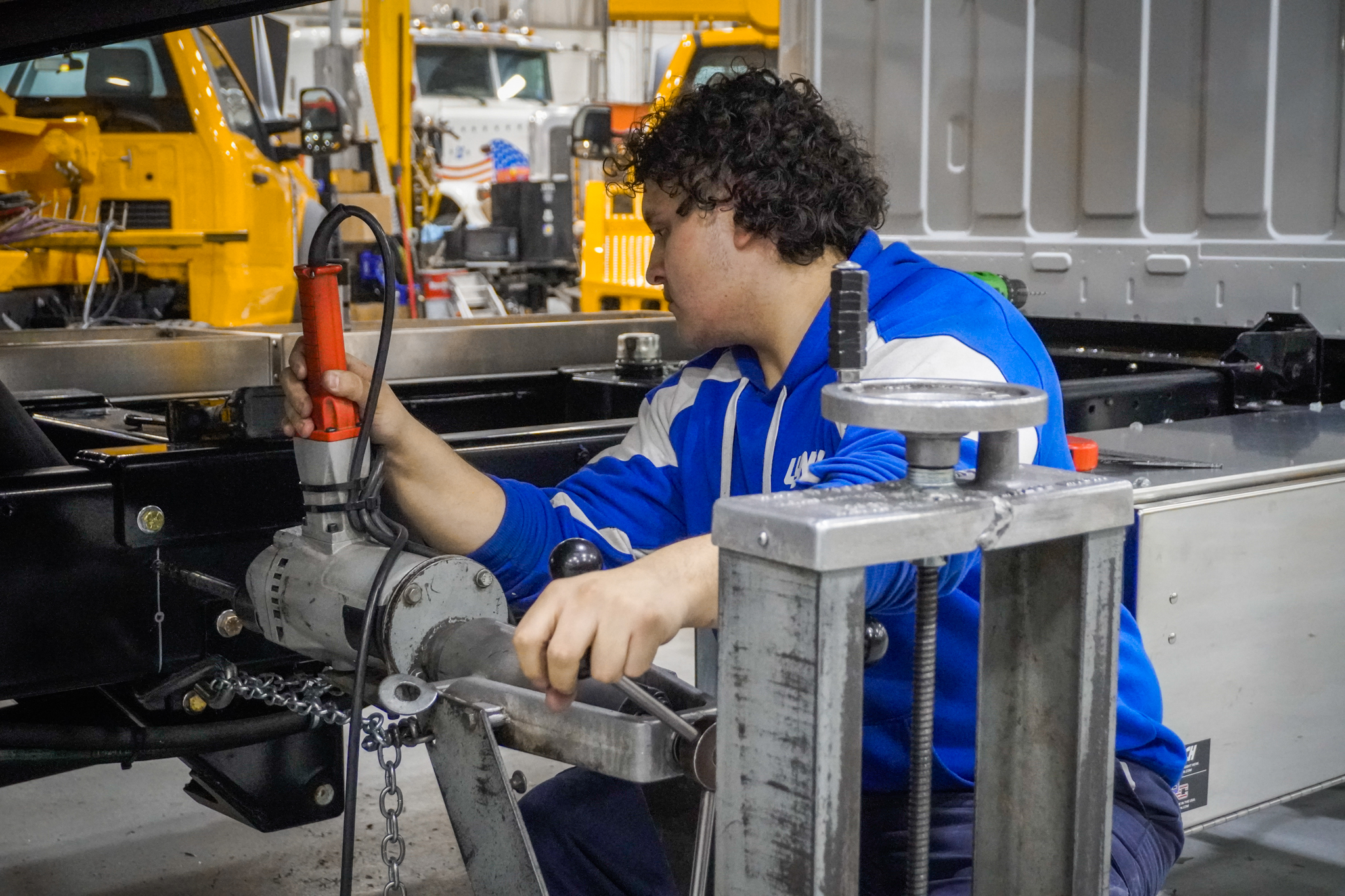
A wrecker that fits your operation perfectly is rarely the one that rolls off a generic production line. The way you spec lighting, toolboxes, winch placement, controls, and storage shapes how fast and how safely your crew works every shift. This is where buying from a dealer with real build capability pays off, because the truck gets tailored to your jobs rather than forced to fit them.
Smart upfitting starts with the work. Heavy scene work calls for serious lighting and clear sightlines. A lot of secured-storage needs point toward a thoughtful compartment layout. Frequent highway recovery makes the case for the right warning and scene lighting package. The in-house custom build and upfit work that Lynch Truck Center handles puts these decisions in the hands of people who understand both the equipment and the realities of towing.
Think about your branding and your operators too. Paint, wraps, and a clean professional finish turn every tow into rolling advertising in your market. Around the controls, good ergonomics reduce fatigue on long shifts and cut the small mistakes that creep in when a tired operator fights awkward equipment. A well-upfitted truck is faster on every call, and that speed compounds over thousands of jobs into real money.
Total Cost of Ownership, Uptime, and Parts Support
Sticker price is the number everyone fixates on, and the one that matters least over the life of the truck. The real cost of a wrecker shows up in fuel, maintenance, repairs, downtime, and how fast you get it back on the road when something breaks. A rig sitting in the shop waiting on a part is not earning, and lost revenue adds up faster than most owners expect.
Parts availability and service support belong near the top of your buying criteria for that reason. A truck on a widely supported chassis with a body from a major manufacturer is far easier to keep running than an orphan unit with hard-to-source components. Being close to a dealer that services both the chassis and the recovery equipment shortens the gap between breakdown and repair.
Factor in routine maintenance and consumables over a realistic ownership period. A slightly higher purchase price often buys lower operating costs and better reliability, and that is the math that decides whether a truck makes money. Uptime quietly determines profitability in this business, and the truck that is always ready to roll beats the cheaper one that lets you down on a busy night.
How Financing Shapes the Buying Decision
How you pay for a wrecker affects your business almost as much as which truck you choose. Few towing companies pay cash for a recovery rig, and the right financing or leasing structure keeps your cash flow healthy while you put the truck to work earning. The monthly payment has to make sense against the revenue the truck realistically brings in.
Financing also changes the calculus on new versus used and on how much truck you can justify. A manageable payment on a properly specced new unit may serve you better than buying a cheaper used truck outright and tying up capital you need elsewhere. The flexible truck financing options available through a dedicated dealer help match the structure to your budget and your growth plans, with terms built around commercial buyers rather than consumer loans.
When you weigh any medium duty wrecker for sale against your numbers, run the full picture. Down payment, monthly cost, the revenue the truck generates, and its resale value down the road all belong in the same calculation. A truck that pencils out over its working life is a good buy even at a higher price, while a cheap rig that strains your finances or underperforms on the job is no bargain at all.
Spec'ing a Truck That Works as Hard as You Do
The right medium duty wrecker is the one matched to your call mix, your terrain, and the way your crew works, not the one with the flashiest numbers. Get the chassis, the boom, the body, and the build right, and the truck rewards you with years of reliable, profitable service. When you are ready to spec a rig around the work you actually run, the team at Lynch Truck Center can help you build it right and back it for the long haul. Take a look at the towing inventory to find what fits your operation.